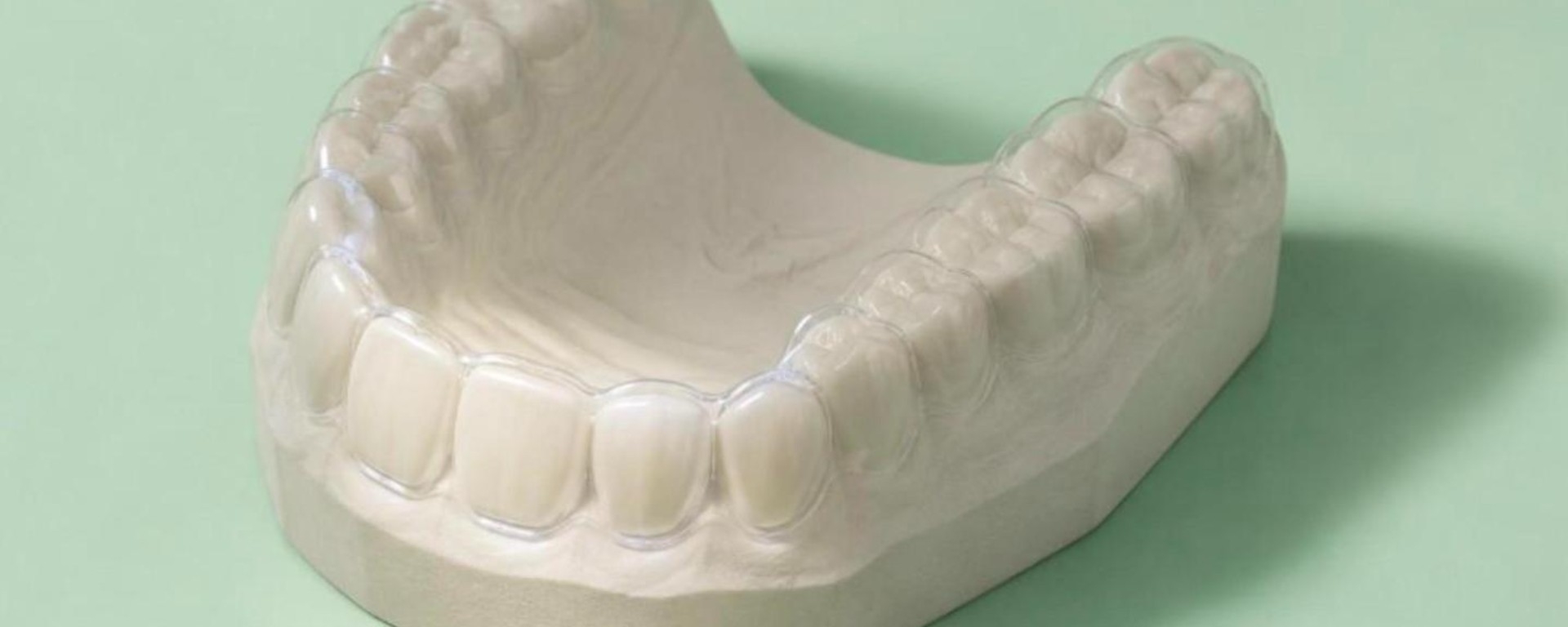
Since the front teeth are the most visible area when smiling, a significant number of patients who come to the clinic with crowding or gap complaints want only this area to be corrected. When there is no noticeable problem in the back teeth, people wonder whether treatment can be limited to the front teeth only. In some cases, this is possible. Mild crowding, small gaps between the front teeth and minor shifts that develop over time in people who have previously had orthodontic treatment can be corrected with a limited treatment plan.

However, whether treatment can be applied only to the front teeth cannot be determined by looking at how the teeth appear from the outside. The front teeth are part of the way the lower and upper jaws close together, and every change made to these teeth can affect the chewing pattern. Whether a limited treatment with Invisalign aligners is suitable is decided by the orthodontist after an intraoral examination and bite analysis.
How Is a Treatment Plan Prepared for Front Teeth Crowding?
Planning begins with a digital scan of the inside of the mouth. Thanks to this scan, the position of the teeth, their relationship with each other and the way the lower and upper jaws close are examined in three dimensions. The dentist evaluates whether there is enough space in the dental arch for the front teeth to line up properly. If space is insufficient, the necessary room can be gained by reducing very small amounts of enamel from the side surfaces of the teeth. If this procedure is to be included in the plan, which teeth it will be applied to and to what extent are determined before treatment begins.
After the evaluation, the stages the teeth will go through to reach their final position are planned digitally, and this plan is shared with the patient through a simulation. To help the teeth move in the desired direction, small tooth-colored bumps called attachments may be placed on the surface of some teeth. The simulation offers a projection of how the process will progress. The actual result, however, may vary depending on the structure of the mouth and regular use of the aligners.
Does Correcting Only the Front Teeth Affect the Bite?
The upper front teeth close in front of and slightly over the lower front teeth. This relationship plays an important role both in biting and in the side-to-side movements of the jaw. When the position of the front teeth is changed, this balance must be maintained. In people whose bite is within normal limits and whose problem is limited to the alignment of the front teeth, a limited treatment can be applied without disturbing the bite relationship.
The picture is different in cases such as deep bite, open bite, crossbite or noticeable discrepancies between the lower and upper jaws. In such cases, correcting only the front teeth may not solve the bite problem, even if it improves appearance. In some cases, it may even negatively affect the way the teeth contact each other. In such a situation, the dentist may recommend a treatment plan covering all teeth. This evaluation aims to protect both the health of the teeth and the long-term stability of the result achieved.
How Long Does Invisalign Treatment for the Front Teeth Take?
In treatments limited to the front teeth, the distance the teeth need to travel is generally short, so fewer aligners are required. For this reason, the process may be shorter compared to comprehensive treatments and, depending on the case, may be completed within a few months to a year. The degree of crowding, how much the teeth are rotated and whether additional procedures are needed to gain space are the main factors determining the total duration.
Keeping the duration close to the projected schedule depends on wearing the aligners for an average of 20 to 22 hours a day and not missing check-up appointments. When aligners are not used regularly, the teeth may not complete the planned movement on time and the duration may be extended. After Invisalign treatment is completed, a retainer is used to prevent the teeth from returning to their previous position. Since the front teeth are prone to such shifts, following the dentist's recommendations during the retention period is important for preserving the result achieved.