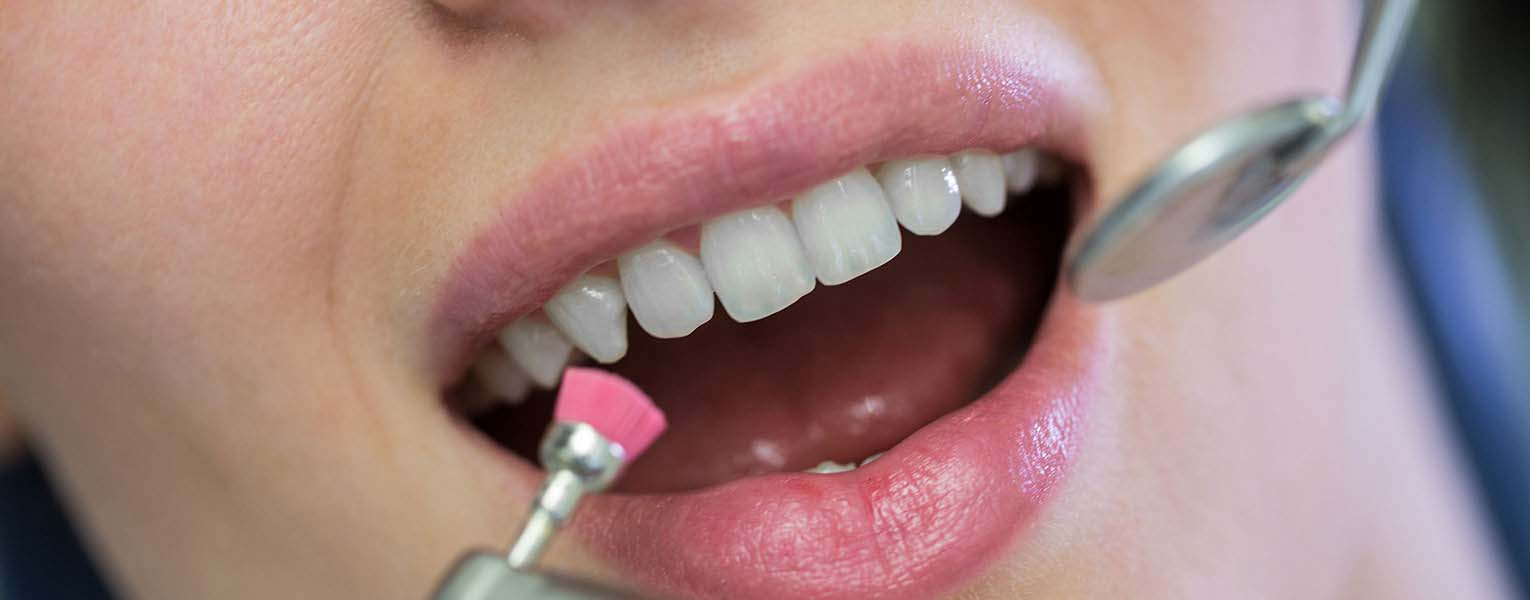
What is Dentgroup Total Care?
Dentgroup Total Care includes routine dental scaling, plus air polishing (stain removal with pressurized powder), polishing, flossing, tongue cleaning, fluoride application to help strengthen your teeth, and personalized oral hygiene instruction.
Daily oral care alone may not completely prevent plaque and bacteria buildup in hard-to-reach areas of the mouth. Areas such as the gumline, between the teeth, and the surface of the tongue may not be cleaned sufficiently with regular brushing and flossing at home. Dentgroup Total Care is designed as a comprehensive professional maintenance protocol that addresses all of these areas.
This approach not only helps eliminate existing problems but also aims to reduce the risk of future conditions such as gum disease, tooth decay, and bad breath. At the end of the appointment, personalized oral hygiene education is provided to help improve each patient's daily home care routine.
Why Do I Need Dentgroup Total Care?
Plaque accumulation is high especially at gums and interdental spaces, as a result of incorrect chewing habits and improper teeth brushing. By time, this plaque turns into calcified tartar and discoloration starts to occur. This type of tartar is the main cause of gingival diseases. Patients are unable to eliminate such plaque and discoloration by themselves. Therefore, tartar buildup gradually increases. Along with tartar buildup comes oral malodor, loose teeth, bleeding gums, and unpleasant brown discoloration in the mouth. In order to avoid these, it is recommended to have total oral care by a dentist at regular intervals.
What Does Dentgroup Total Care Include?
Dentgroup total care includes;
- Lip Moisturization with Coconut Oil
- Tartar Cleaning
- Removing Stains with Airflow
- Tooth Polishing
- Tongue Cleaning
- Dental Floss Application
- Fluoride Application
- Oral Hygiene Education
Is Dental Anesthesia Needed During the Procedures?
Unless deep cleaning of tartar below the gumline and root surface planing are required, local anesthesia is generally not necessary during the procedure.
Routine dental scaling and air polishing (Airflow) are performed on the tooth surface and above the gumline, allowing the treatment to be completed comfortably in most cases. However, patients with significant tartar accumulation below the gums or increased gum sensitivity may require local anesthesia based on the dentist's clinical assessment. This decision is made according to each patient's individual clinical condition, and the dentist will provide detailed information before treatment.
Will I Feel Any Ache or Pain?
Mild sensitivity may be experienced in areas affected by gum recession or gum inflammation.
In general, Dentgroup Total Care procedures can be performed comfortably without causing significant discomfort for most patients. However, tissues affected by gum inflammation are naturally more sensitive, so it is normal to experience mild sensitivity during the cleaning process. This sensation is usually temporary and tends to decrease once the procedure is completed. Following treatment, some patients may also experience temporary sensitivity to hot and cold foods or beverages for a few days. This is a normal part of the healing process and typically resolves as the gums recover.
Will My Gums Bleed?
Patients with swollen and inflamed gums may experience bleeding during the procedure. However, this is generally mild, is not a cause for concern, and does not continue after the treatment. As the inflammation begins to resolve following the cleaning, the gums gradually regain their healthy, firm, and pink appearance.
Bleeding is actually a sign of inflammation in the affected area. When plaque and tartar remain along the gumline for an extended period, they can cause chronic irritation of the gum tissue and increase blood vessel formation. For this reason, bleeding observed during professional cleaning does not indicate that the treatment is unnecessarily damaging the tissue. On the contrary, it is a sign that the inflamed tissue is being cleaned. With proper oral hygiene after the procedure, the gums usually begin to heal, and the bleeding typically stops completely within a few days. Follow-up appointments are also important to evaluate the healing process and ensure the gums are recovering as expected.
How Long Does Dentgroup Total Care Take?
The procedure typically takes 30–45 minutes. If there is extensive tartar buildup requiring treatment below the gumline, a second appointment may be necessary. A follow-up visit is also scheduled after the treatment to evaluate the results.
The duration of the procedure depends primarily on the amount of tartar present, the degree of staining, and the overall condition of the mouth. For patients who have not had a professional cleaning for a long time or who have significant tartar deposits beneath the gums, completing the entire treatment in a single session may not be appropriate for optimal gum health. In such cases, a second appointment may be planned. The follow-up visit allows the dentist to monitor the healing of the gums and perform additional treatment if necessary. It is an important step in assessing the effectiveness of the treatment.
Do Ultrasonic Cleaners Harm the Teeth?
Improper use of ultrasonic instruments may cause microscopic scratches on the tooth surface. These tiny scratches can make teeth more prone to staining over time. However, when the instruments are used correctly and polishing is performed after cleaning, Dentgroup Total Care is a safe procedure that should be carried out regularly as part of preventive oral care.
Ultrasonic scalers use high-frequency vibrations to remove tartar from the tooth surface. When operated by an experienced dentist using the appropriate pressure and angle, they can provide effective cleaning without damaging the tooth enamel. The polishing procedure performed after cleaning smooths microscopic surface irregularities, helping to reduce the buildup of plaque and prevent teeth from becoming stained again too quickly. For this reason, professional cleaning and polishing are considered complementary steps, and the full benefits of treatment are best achieved when both are performed together.
At What Intervals Do I Need to Have It Done?
The accumulation of plaque and tartar varies depending on factors such as tooth alignment, saliva composition, brushing technique, and dietary habits. Dentgroup Total Care is recommended as needed during routine dental check-ups, which are typically scheduled every six months.
Since every individual has a unique oral structure and different daily habits, the ideal frequency of professional care may vary from person to person. For example, people with crowded teeth may experience faster plaque accumulation in areas that are difficult to clean, while individuals with reduced saliva flow may develop tartar more frequently. Smoking and regular consumption of tea or coffee can also contribute to faster staining. Therefore, some patients may benefit from professional care at intervals shorter than six months, while six-month intervals may be sufficient for individuals with a lower risk profile. The most appropriate maintenance schedule should always be determined by the dentist based on an individual clinical evaluation.
Does Dentgroup Total Care Eliminate Bleeding and Foul Breath?
Unless they are caused by an underlying systemic disease, gum bleeding and bad breath related to gum disease can be effectively treated with Dentgroup Total Care.
One of the most common causes of bad breath (halitosis) is the bacterial activity associated with plaque and tartar buildup. These bacteria, particularly those accumulating in periodontal pockets and on the surface of the tongue, can produce volatile sulfur compounds responsible for unpleasant oral odor. As part of Dentgroup Total Care, professional scaling, tongue cleaning, and polishing help significantly reduce the bacterial load. Bleeding gums are also commonly a sign of inflamed gum tissue, and a noticeable reduction in bleeding is generally expected once plaque, tartar, and inflammation are removed. However, if bleeding or bad breath persists despite treatment, a more comprehensive examination may be required, as these symptoms could indicate an underlying systemic condition.
What is the Benefit of Applying Fluoride Gel?
Fluoride gel reacts with the minerals in tooth enamel to form fluorapatite crystals, which are more resistant to tooth decay and help reduce tooth sensitivity. As a result, the enamel becomes stronger, smoother, and more resistant to acid attacks.
Tooth enamel is continuously exposed to demineralization caused by acidic foods and beverages consumed throughout the day. Fluoride application supports the remineralization process by helping restore lost minerals, thereby increasing the enamel's resistance to acid erosion. In addition, fluoride can reduce acid production within dental plaque by inhibiting bacterial metabolism. For these reasons, fluoride application is considered an important preventive treatment for reducing the risk of tooth decay and minimizing tooth sensitivity.
How is Fluoride Gel Applied?
The teeth are dried by blowing air. Then, 5 ml of 1.23% APF gel is placed in special foam trays and the tray is removed after 4 minutes at most. The gel residue is washed away. The patient is asked not to rinse their mouth for 30 minutes.
Is Swallowing Airflow Powder Harmful in Any Way?
No kind of harm has been observed due to swallowing Airflow powder has been observed. Nevertheless, the risk of the patient swallowing the powder is minimized by using dual saliva ejectors.
Is There An Age Limit for This Application?
No. There is no age restriction. The procedure can also be performed on primary (baby) teeth using a gentler approach.
Although plaque and tartar buildup on primary teeth is generally less extensive than on permanent teeth, professional cleaning may still be beneficial, particularly for children who have not yet developed effective brushing habits. Professional cleaning of primary teeth can also help children establish good oral hygiene habits from an early age. In adults, the importance of regular professional care increases with age due to conditions such as gum recession and exposed root surfaces. The extent and intensity of the procedure are individually tailored by the dentist according to each patient's age, oral condition, and specific needs.
Is There Any Harm In Having It Done During Pregnancy?
The gums are more hyperemic and edematous during pregnancy due to hormones. Therefore, the amount of bleeding may be more than usual, however, it is not a problem. Total Care can be easily performed, preferably in the second trimester of the pregnancy.
Will There Be Teeth Sensitivity After the Procedures?
Teeth sensitivity may be observed after most dental scaling procedures, but this does not occur with Dentgroup Total Care. The fluoride gel eliminates teeth sensitivity and leaves a fresh feeling in the mouth.
Does It Damage the Fillings or Crowns?
No. During Dentgroup Total Care, fillings and dental restorations are cleaned carefully without causing damage.
Plaque and tartar can also accumulate on the surfaces of fillings and dental restorations over time. In particular, the margins of fillings and the junctions between restorations and the gums are areas where bacteria are more likely to accumulate. Regular professional cleaning of these areas helps prolong the lifespan of restorations while reducing the risk of secondary tooth decay around them. The instruments and materials used during the procedure are specifically selected and applied in a way that does not damage restorative materials. During treatment, the dentist can also assess the condition of existing restorations and identify any potential problems at an early stage.
Will the Color of My Teeth Whiten After This Procedure?
Once the discoloration and tartars are eliminated, a lighter color will surely be achieved. However, it will not be lighter than the original color of your teeth. In order to achieve a whiter teeth color, you need to have your teeth bleached.
What is Dentgroup Wash and Shine?
Dentgroup Wash and Shine is a 15-minute professional cleaning procedure that focuses only on the front surfaces of the teeth. It includes air polishing (Airflow) and polishing to remove surface stains using pressurized powder technology.
This treatment is recommended for patients with limited time and for those undergoing orthodontic treatment.
Because it can be completed in a relatively short time, it is an ideal option for people with busy schedules or those who travel frequently. The treatment primarily targets stains and discoloration on the visible front surfaces of the teeth, helping to improve their appearance. For patients wearing braces, pigments and plaque can accumulate around brackets and wires where regular brushing may not be sufficient. Wash and Shine helps reduce these surface stains and maintain a cleaner, brighter smile during orthodontic treatment.
Why is Tongue Cleaning Done? How is It Performed?
The tongue is covered with papillae, making it an ideal surface for bacterial accumulation. It is also one of the most commonly neglected areas during daily oral hygiene. During the procedure, the tongue is gently brushed for approximately 10 seconds using a low-speed rotary brush. This process does not cause discomfort and also helps raise awareness of the importance of cleaning the tongue as part of a complete oral hygiene routine.
The papillae on the dorsal (upper) surface of the tongue can harbor a significant amount of bacteria, making this area one of the most common sources of bad breath. Research has shown that many of the volatile sulfur compounds responsible for halitosis are produced by bacteria residing on the tongue's surface. For this reason, tongue cleaning is considered an essential and complementary component of good oral hygiene.
The Author of the Article: Dt. Seçil Duman Yalçın