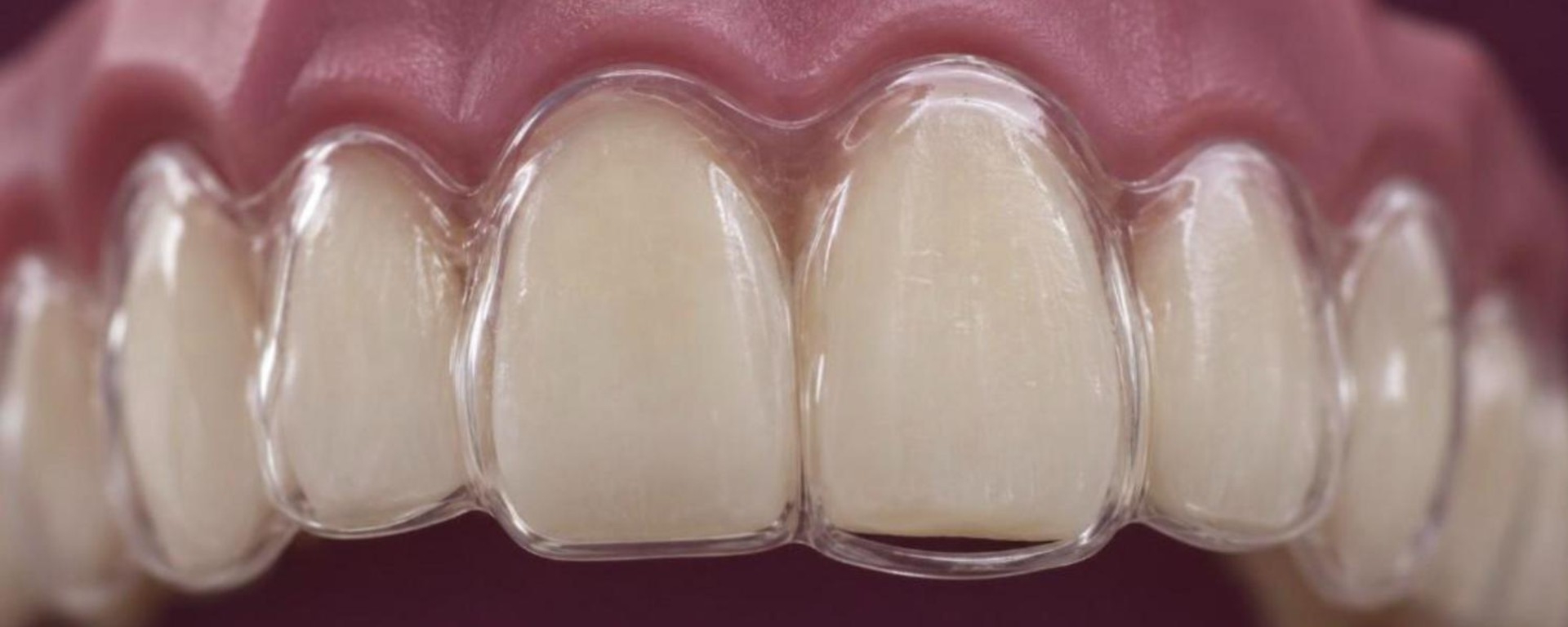
When switching to a new aligner, it is common to feel during the first hours that the aligner squeezes the teeth slightly or does not sit fully in place. Since each aligner is prepared according to the next position of the teeth, a small mismatch between the aligner and the tooth surface can be expected while the teeth have not yet reached that position. In most cases, this mismatch decreases on its own within a few days with regular wear.

In some cases, however, a fit problem may indicate more than a temporary adjustment period. Not wearing the aligners for the recommended time, an attachment coming off, or the aligner losing its shape due to improper cleaning can lead to this situation. Being able to tell which group a fit problem with Invisalign aligners falls into is important for understanding when measures can be taken at home and when the dentist should be consulted.
How Can You Tell That an Invisalign Aligner Does Not Fit Properly?
The most obvious sign is a gap between the edge of the aligner and the tooth surface. This gap is usually noticed at the biting edges of the front teeth or on the chewing surfaces of the molars. When looking in the mirror, it may be seen that the aligner does not fully grip the tip of the tooth and a thin air gap remains in between. Feeling that the aligner lifts slightly off the teeth at the back, or noticing that it moves when touched with the tongue, are other signs.
Areas with attachments also give an idea about the fit. The aligner has small recesses reserved for the attachments. When the aligner fits correctly, these recesses fully surround the attachments. If there is a gap between a recess and an attachment, the aligner may not be fully seated. In addition, discomfort that was not felt with the previous aligner and is concentrated on only one particular tooth may suggest that the tooth in that area has not yet reached its planned position.
What Is a Chewie and How Does It Help the Aligner Fit?
A chewie is a small, cylinder-shaped aid made of a soft and flexible material. It is placed between the teeth while the aligners are in and bitten gently for a few seconds. The pressure applied during this time helps the aligner make closer contact with the tooth surface. Using it especially during the first days of switching to a new aligner and each time the aligner is put in can help close small gaps between the aligner and the teeth.
When using a chewie, you start from the front teeth and move toward the molars on both sides. By biting gently a few times in each area, the aligner is helped to settle evenly on all tooth surfaces. Doing this a few times a day for a few minutes may be sufficient. A chewie is an aid and does not replace the daily wear time of the aligners. It should also not be expected to solve a noticeable, long-lasting fit problem on its own.
Can Treatment Continue With an Aligner That Does Not Fit Properly?
For mild mismatches seen in the first day or two with a new aligner, continuing to wear the aligner regularly and supporting it with a chewie is usually sufficient. As the teeth reach the planned position, the aligner also begins to settle into place. However, if the fit problem still persists after a few days, you should not move on to the next aligner. Switching to a new aligner before the teeth have completed the movement planned for the current one may widen the gap and make the problem more noticeable in later stages.
In this case, the dentist may recommend wearing the current aligner for longer or going back to the previous aligner. In cases where the teeth have fallen noticeably behind the plan, a new intraoral scan may be needed to update the plan. Attempts such as forcing the aligner into place, trying to change its shape by heating it or cutting it may damage both the aligner and the teeth. During Invisalign treatment, it is important that the dentist decides on every change to the plan so that treatment progresses in the right direction.
When Should an Orthodontist Be Consulted?
If there is a gap that does not decrease within a few days despite regular wear and the use of a chewie, it is recommended to inform the clinic without waiting for the check-up appointment. An attachment coming off or breaking, the aligner cracking, or its shape being distorted by something like hot water are also situations in which the dentist should be consulted. These problems can prevent the aligner from gripping the teeth correctly and make it harder for treatment to progress as planned.
Experiencing similar fit problems with several aligners in a row may indicate that the teeth are generally behind the plan. In this case, the dentist evaluates the current position of the teeth and decides whether the plan needs to be updated. The clinic should also be contacted in cases such as gradually increasing pain that differs from the pressure felt in the first few days after an aligner change, or irritation or sores on the gums. A fit problem noticed early can often be resolved without significantly affecting the treatment duration.