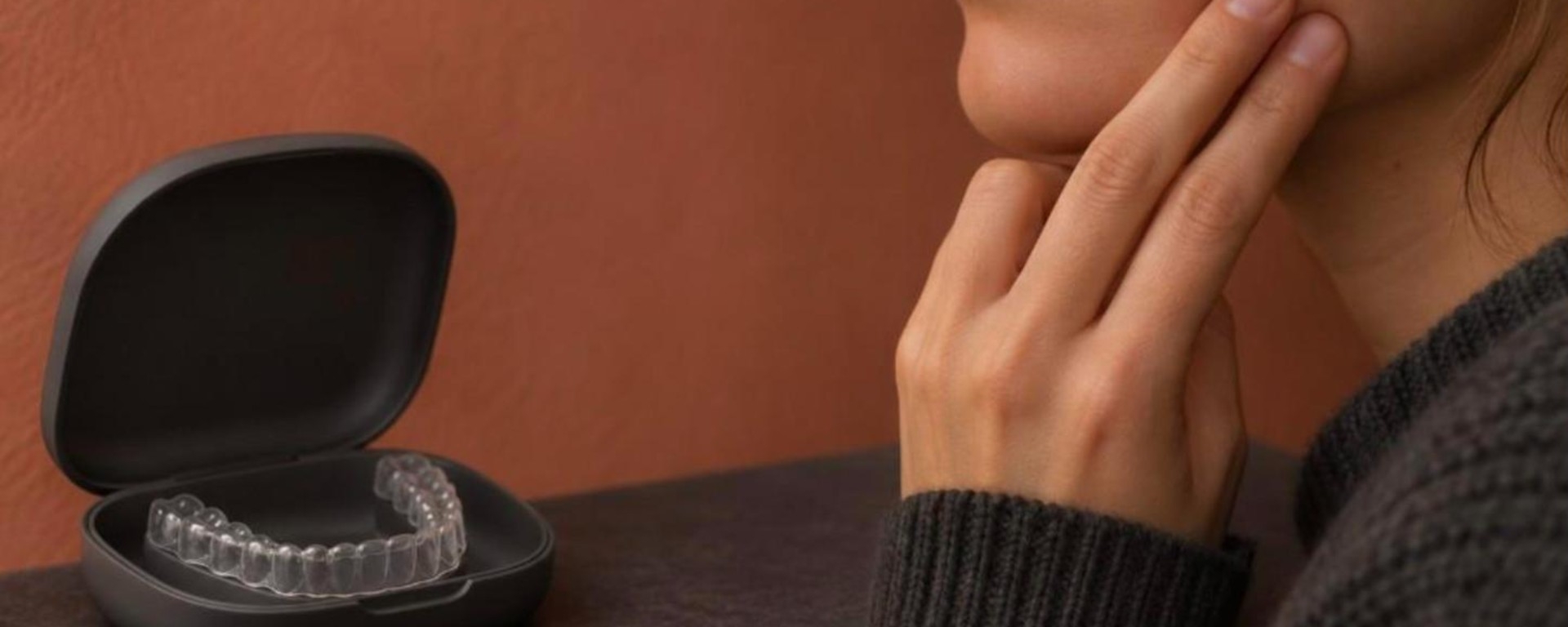
One of the things people considering clear aligner treatment wonder about most is what they will feel during the process. For teeth to change position, a controlled force must be applied to them. This force may be perceived as pressure or tightness in the teeth, especially at the start of treatment and each time a new aligner is put in. Many patients describe this feeling not as sharp pain but as sensitivity, as if the teeth are being squeezed or are slightly sore.

The intensity of the pressure varies from person to person. While some patients notice only mild tension, others may experience noticeable sensitivity when chewing during the first days. In treatment carried out with Invisalign aligners, this sensitivity is usually temporary and decreases as the teeth adapt to their new positions. Knowing what can be considered normal can help the process go more comfortably.
Is the Pressure Felt in the First Days Normal?
Feeling pressure in the teeth during the first days of wearing aligners is to be expected. Teeth move together with the surrounding bone and connective tissue. When the aligner applies force to a tooth, a remodeling process begins in these tissues, and this process can cause temporary sensitivity in the teeth. This pressure can be regarded as a sign that the aligner is doing its job and that the teeth have started to move in the planned direction.
In addition to pressure, it may take time for the tongue and cheeks to get used to the edges of the aligner in the first days. A slight difference when speaking or a feeling of having a foreign object in the mouth usually decreases within a few days. Continuing to wear the aligners for an average of 20 to 22 hours a day during this period helps both the teeth and the soft tissues in the mouth adapt more quickly. Removing the aligners frequently because of discomfort, on the other hand, may prolong the adjustment period.
How Long Does Invisalign Discomfort Last?
For most patients, the pressure felt after putting in an aligner or switching to a new one eases noticeably within a day or two. The pressure is usually more pronounced in the first hours and the first night. It then gradually decreases as the teeth adapt to the aligner. The sensitivity felt while eating in the first days of an aligner also mostly disappears within this time.
Later in treatment, the feeling of pressure may return briefly with each aligner change. Many patients notice that this feeling is milder with later aligners compared to those at the beginning of treatment. However, since more movement may be planned for some aligners, the pressure may feel slightly more pronounced at certain stages compared to the previous aligner. Pressure that decreases within a few days after a change is considered a normal part of the process.
Why Does Sensitivity Increase When Switching to a New Aligner?
Each new aligner is prepared according to the next position of the teeth. Since the teeth have not yet reached this position, the aligner applies more force to the teeth when first put in than the previous aligner did in its final days. For this reason, the feeling of tightness may increase in the first hours after a change. As the teeth move toward the new position, the fit between aligner and teeth improves and the force is felt less.
It is also common for sensitivity to be concentrated in a particular tooth. The tooth planned to make the most movement with that aligner may show more noticeable sensitivity than the others. On teeth with attachments, the pressure may also be felt more clearly because the aligner grips the tooth more tightly. An aligner not fitting the teeth fully in the first days can also increase sensitivity. Therefore, it is important to make sure the aligner is properly seated on the teeth after a change.
What Can Be Done to Relieve Aligner-Related Discomfort?
Switching to a new aligner in the evening, before going to bed, is a frequently recommended method. This way, the first hours when the pressure is most pronounced are spent asleep. Choosing soft foods instead of very hard foods or those that require prolonged chewing for a day or two after the change can reduce sensitivity while chewing. Drinking cold water while wearing the aligner may also have a soothing effect for some patients.
Gently biting on soft cylinders called chewies for a few minutes to help the aligner fit the teeth fully can help distribute the pressure more evenly across the teeth. If the discomfort is severe enough to make daily life difficult, the dentist should be consulted about the use of pain relievers, and medication should only be used as recommended by the dentist. If a rough spot on the edge of the aligner that irritates the tongue or cheek is noticed, it is better to inform the clinic rather than filing or cutting the aligner at home, in order to preserve its structure.
When Should You See a Dentist?
Pain that does not decrease within a few days after an aligner change, but instead gradually increases, may indicate a situation that needs to be evaluated. Sharp, throbbing pain in a single tooth, noticeable sensitivity to hot or cold, or a tooth that hurts even when the aligner is not in may be due to a cause other than orthodontic pressure. With such symptoms, it is recommended to contact the clinic without waiting for the check-up appointment.
Sores caused by the edges of the aligner on the gums or inside the cheek, a cracked aligner, a detached attachment and swelling of the face are also situations in which the dentist should be consulted. It may not always be easy to distinguish the normal pressure experienced during Invisalign treatment from another problem. Therefore, in uncertain situations, seeking the opinion of an orthodontist is the most appropriate approach, both for the healthy progress of treatment and for the early detection of a possible problem.