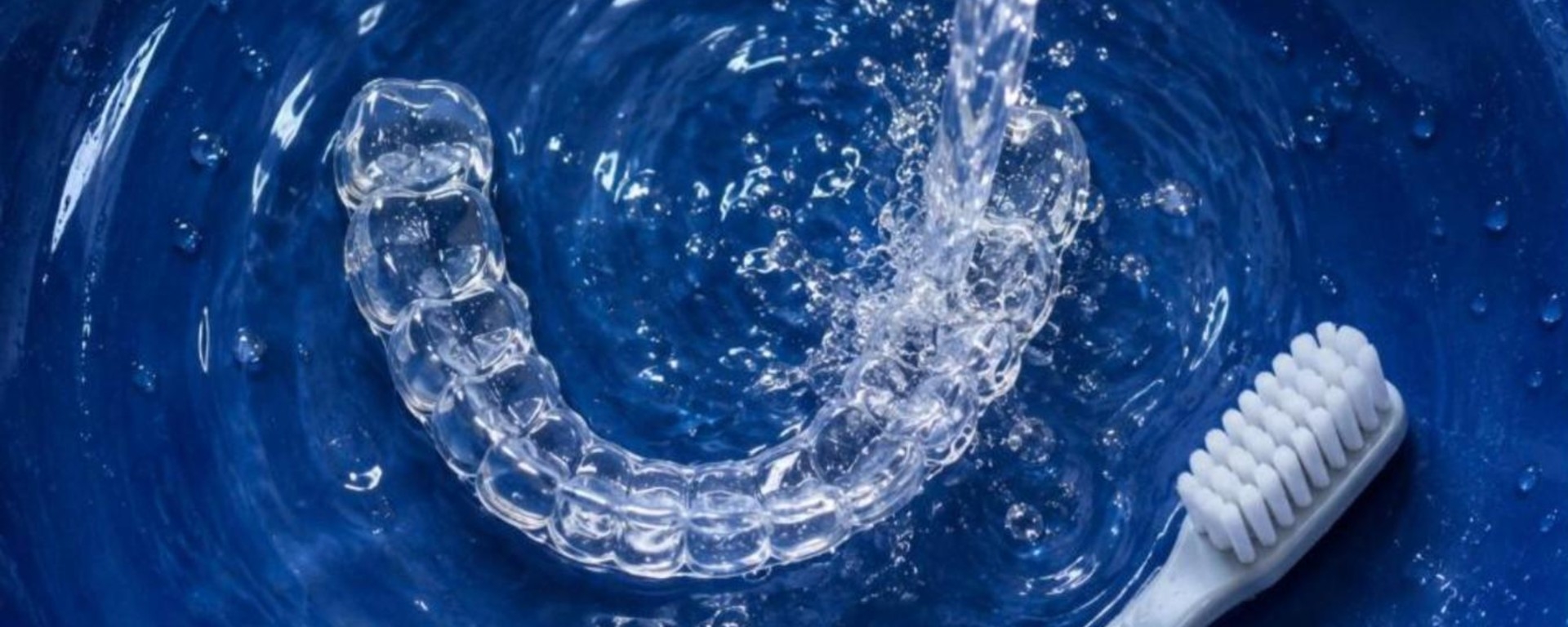
Since aligners stay in direct contact with the teeth for most of the day, cleaning them should be considered part of oral hygiene. Saliva, food residue and bacteria naturally present in the mouth can gradually form a thin layer on the aligner surface. On aligners that are not cleaned regularly, this layer becomes thicker. As a result, problems such as odor, discoloration and loss of transparency may occur.

A proper cleaning habit helps the aligner stay clear and hygienic throughout treatment. Because aligners are made of a thermoplastic material, the cleaning method should be chosen so that it does not damage the aligner structure. Although the cleaning routine for Invisalign aligners takes only a few minutes, it can make a significant difference to both the appearance of the aligner and its fit on the teeth.
How Many Times a Day Should Invisalign Aligners Be Cleaned?
It is recommended that aligners be cleaned at least twice a day, in the morning and in the evening. Since saliva flow in the mouth decreases overnight, more buildup may form on the aligner surface in the morning. Cleaning in the evening removes the residue that has accumulated during the day. During cleaning, the aligner is rinsed under lukewarm water and its inner and outer surfaces are gently brushed with a separate soft-bristled toothbrush.
In addition to these two main cleanings, there is a small routine to follow after every meal. Aligners are removed before eating. After the meal, the teeth are brushed or, when this is not possible, the mouth is at least rinsed thoroughly with water, and then the aligner is rinsed and put back in. An aligner placed over teeth that have not been cleaned may trap food residue against the tooth surfaces. This can negatively affect both aligner hygiene and the protection of the teeth against decay.
Which Products Can Be Used to Clean Aligners?
For daily cleaning, lukewarm water and a soft-bristled brush are usually sufficient. For more thorough cleaning, aligner cleaning products recommended by the dentist may be preferred. In this case, the aligners are soaked for the time stated in the product instructions and then rinsed thoroughly. Denture cleaning tablets should not be used, as they are not recommended by the aligner manufacturer. Keeping the aligners in their own storage case when not in use reduces both the risk of contamination and the risk of losing them.
Some products and methods, however, can damage the aligner. Because of the abrasive particles they contain, toothpastes may cause fine scratches on the aligner surface. Over time, these scratches can make the aligner look dull and more prone to staining. Hot or boiling water can distort the shape of the thermoplastic structure and cause the aligner not to fit the teeth properly. Alcohol-based solutions and colored mouthwashes should also not be used for cleaning, as they may affect the aligner material or leave stains.
Why Do Aligners Turn Yellow and Develop an Odor?
The most common cause of yellowing is consuming colored foods and drinks while wearing the aligners. Foods such as tea, coffee, sour cherry juice, curry and mustard can leave stains on the aligner surface. Aligners may also turn yellow over time in people who smoke. Drinking only water while wearing the aligners and removing them for other foods and drinks is the most effective way to prevent discoloration. Since aligners are replaced with new ones at intervals set by the dentist, yellowing usually does not become noticeable when they are cleaned regularly.
Odor, on the other hand, is mostly caused by bacteria building up on the aligner surface. Not cleaning the aligners sufficiently, putting them in without brushing the teeth after meals, or leaving them exposed and dry when removed can increase this buildup. Dry mouth can also make odor more noticeable. If a persistent odor is noticed during Invisalign treatment despite regular cleaning, it is helpful to have the dentist evaluate at a check-up whether there is another cause related to the gums or oral health.