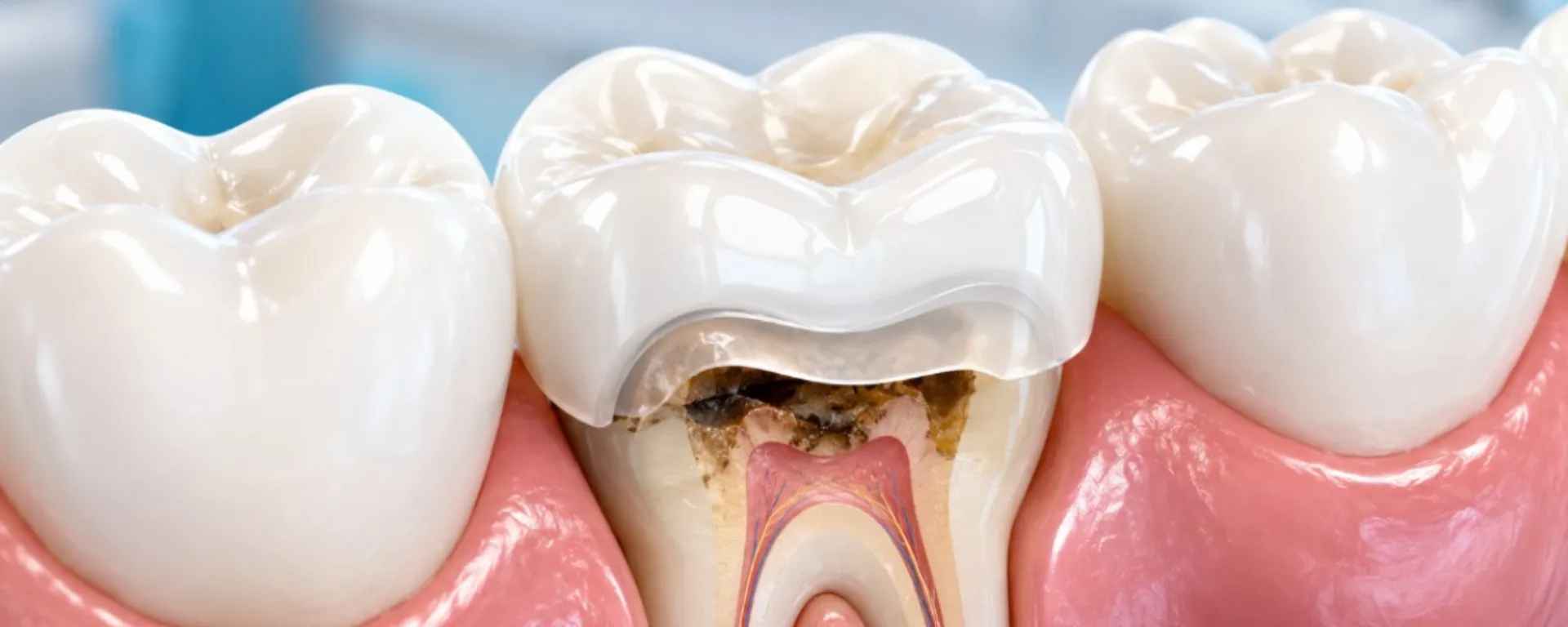
When decay develops in a tooth beneath a dental crown, the problem may not always be easily noticeable from the outside. Since the crown covers a large portion of the natural tooth structure, decay often develops around the edges of the crown, at the gum line, or in the tooth structure beneath the crown. In the early stages, there may be no visible changes. Nevertheless, sensitivity to hot, cold, or sweet foods, discomfort during chewing, an unpleasant taste or odor around the crown, and discoloration along the gum line may suggest an underlying problem with the tooth. The formation of a gap at the edge of the crown or the crown gradually losing its proper fit may also make it easier for bacteria and food debris to reach this area.

Symptoms alone are not sufficient to definitively identify decay beneath a crown. During a dental examination, the dentist evaluates the marginal fit of the crown, the surrounding gum tissues, and the tooth's response during chewing. When necessary, X-ray images may be used to examine possible changes beneath the crown or around the tooth root. While some cavities become more visible through imaging techniques, in certain cases a definitive assessment can only be made after the crown has been removed. Therefore, if new sensitivity, an unpleasant odor, pain during chewing, or changes around the crown margins are noticed, it is important to have the tooth examined without waiting for the problem to progress.
What Causes Tooth Decay Under a Crown?
One of the main causes of decay beneath a crown is the development of small gaps between the crown and the natural tooth over time. Even if the crown initially fits the tooth properly, the properties of the bonding material may change over the years, gum recession may occur, or wear may develop along the crown margins. This can create conditions that allow bacteria to reach the tooth structure through the edges of the crown. In particular, inadequate removal of plaque in areas close to the gum line may increase the risk of decay. Since the tooth structure beneath the crown remains natural tooth tissue, it is not completely protected against cavities.
Poor oral hygiene, frequent consumption of sugary or acidic foods and beverages, and failure to regularly clean around the crown may also contribute to the development of decay. If the shape of the crown margin makes it difficult to use dental floss or interdental brushes, plaque may accumulate more rapidly. In addition, cracking, breaking, or loosening of the crown may expose the underlying tooth structure to the oral environment. In teeth that have previously lost a significant amount of structure due to a large filling or decay, the remaining healthy tooth tissue is more limited, meaning that newly developing decay may turn into a significant problem in a shorter period of time.
What Are the Early Signs of Decay Under a Crown?
The early signs of decay beneath a crown may vary from person to person and can sometimes begin very mildly. Brief sensitivity when drinking cold water, aching after consuming sweet foods, or slight discomfort during chewing are among the symptoms that may occur in the early stages. Redness, tenderness, or recurring bleeding of the gums around the crown may also indicate plaque accumulation or a problem with the fit of the crown margin. Some people may notice darkening, a small gap, or a change in appearance along the edge of the crown. However, since discoloration does not always indicate decay, a professional evaluation is necessary.
An unexplained unpleasant taste in the mouth or a persistent bad odor around the crown are also signs that should be taken into consideration. When bacterial accumulation increases due to decay progressing beneath the crown, the odor in the same area may persist despite cleaning. Dental floss repeatedly catching or tearing at the edge of the crown, or becoming difficult to use in an area where it previously passed easily, may also indicate a change in the marginal fit. However, decay beneath crowns does not always produce noticeable early symptoms. Therefore, evaluating crowns that have been in use for a long time during regular dental checkups may help identify problems that develop before a person experiences any complaints.
Can Decay Under a Crown Progress Without Pain?
Decay beneath a crown may progress for a long time without causing pain. When tooth decay is initially limited to the outer layers of the tooth, the nerve tissue is not directly affected, so the person may not experience any pain. Since the crown covers the tooth, it also makes decay more difficult to detect visually, allowing the problem to progress silently. As the decay reaches deeper layers over time, sensitivity to hot and cold temperatures, spontaneous pain, or discomfort during chewing may develop. However, by the time pain appears, the decay may have already progressed beyond its initial stage.
The situation may be different in teeth that have previously undergone root canal treatment and were subsequently covered with a crown. Since the pulp tissue is removed during root canal treatment, the tooth may not develop sensitivity to hot or cold temperatures in the same way as a vital tooth. Nevertheless, new decay may develop in the tooth structure beneath the crown, and the problem may remain unnoticed for a long time. If the decay progresses and affects the tissues surrounding the tooth root, pain during chewing, swelling, or signs of infection may occur. Therefore, the absence of pain does not mean that the tooth beneath the crown is completely healthy. Regular checkups and imaging when necessary may help detect silently progressing problems at an earlier stage.
How Is Decay Under a Crown Treated?
Treatment of decay beneath a crown is planned according to how far the decay has progressed, the amount of remaining healthy tooth structure, and whether the pulp tissue has been affected. In most cases, the existing crown must be removed to access the decayed area. After the crown is removed, the decayed tooth tissue is cleaned away, and the condition of the remaining healthy structure is evaluated. If tissue loss is limited, the tooth can be rebuilt using an appropriate restorative material, after which a new crown can be prepared. Since it is not always possible to remove the existing crown without damaging it, the need for a new crown after treatment is common.
If the decay has reached the nerve tissue of the tooth, root canal treatment may be necessary. If a tooth that has previously undergone root canal treatment develops a new infection around the root, retreatment of the root canal or consideration of other treatment options may be required. If a large portion of the healthy tooth structure has been lost due to decay, it must also be evaluated whether the tooth is still capable of supporting a new crown. In some advanced cases, preserving the tooth may not be possible, and extraction may need to be considered. After treatment, ensuring a proper marginal fit of the new crown, maintaining regular oral hygiene, and cleaning around the crown with dental floss or suitable interdental cleaning tools are important for reducing the risk of new decay.