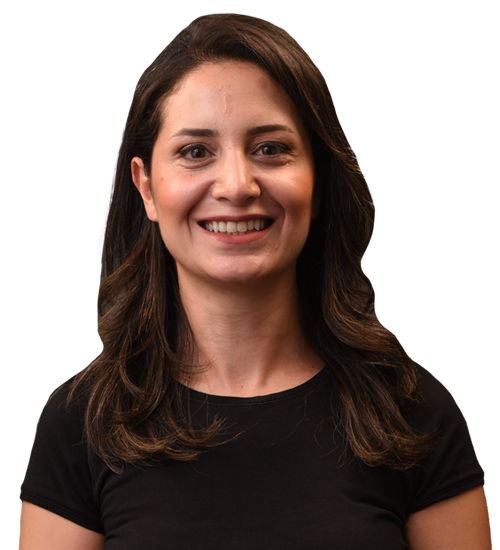
Dr. Merve Elitok was born in Elazığ. She completed her middle and high school education at Elazığ Anatolian High School. She graduated from Ege University Faculty of Dentistry. Her professional work focuses primarily on digital dentistry. She worked in the private sector from 2015-2016. Since 2017, she has been serving her patients as a partner at Dentgroup Bağdat Caddesi Dental Clinic. Dr. Elitok is a member of TDB (Turkish Dental Association), CADA (Cad-Academy), and EDAD (Academy of Aesthetic Dentistry).
Merve Elitok Şener
Select the clinic you want to make an appointment with.
See cases
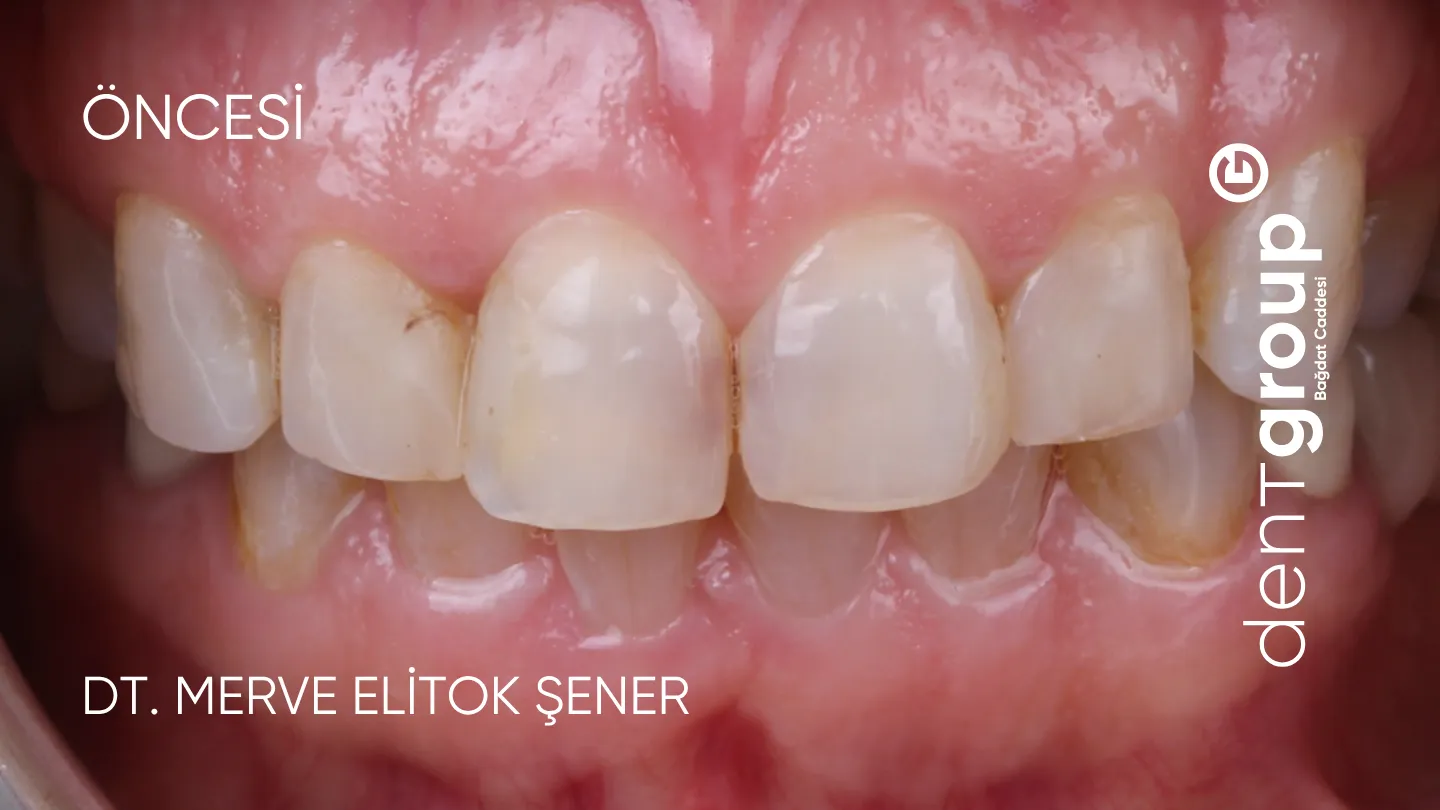
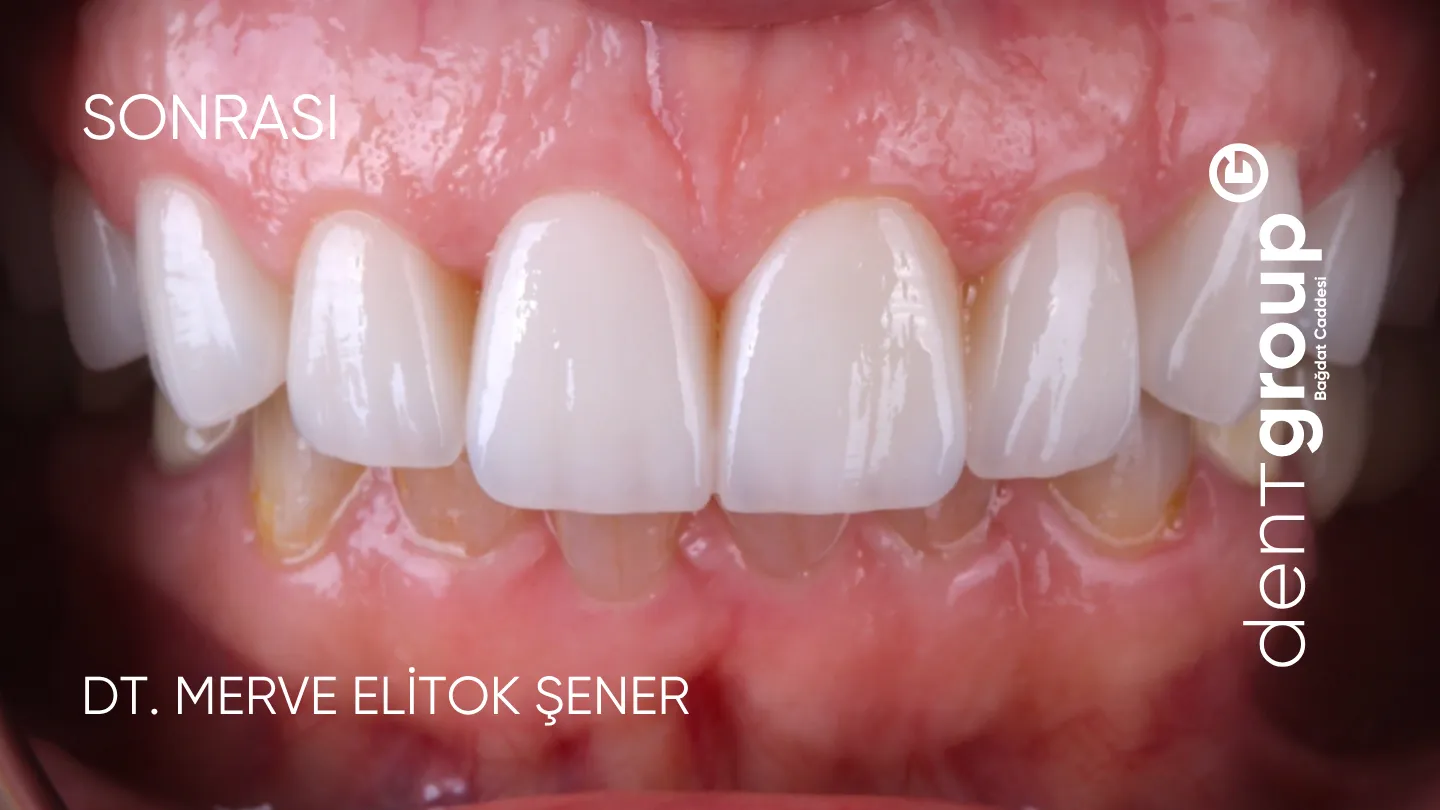
Aesthetic Smile Rehabilitation with Digital Smile Design and E-max Glass-Ceramic Crowns
Treatment began on November 20, 2023, and was completed on November 28, 2023. Final treatment photographs were taken on January 22, 2024.
The patient presented to our clinic with concerns regarding the aesthetic appearance of their teeth. Following a clinical evaluation, an aesthetic prosthetic rehabilitation involving 10 teeth in the upper jaw was planned.
The treatment process began with intraoral and facial photographs, followed by digital impressions obtained using an intraoral scanner. A personalized digital smile design was then created. Due to the presence of extensive existing fillings, crown restorations were considered the appropriate treatment option.
Guided by the digital smile design, tooth preparation was performed and new digital impressions were obtained. E-max glass-ceramic material was selected for the final restorations based on the patient's aesthetic and functional requirements. A total of 10 glass-ceramic crowns were placed in the upper jaw. Particular attention was given to the natural shape of the teeth, shade harmony, occlusal relationships, and overall integration with facial aesthetics.
Upon completion of treatment, the existing aesthetic irregularities were addressed, achieving a natural-looking and aesthetically balanced smile rehabilitation.
*This post is intended for informational purposes only and does not constitute advertising or promotion.
*The images have been published with the patient's explicit consent.
*Treatment outcomes are individual, and the same results cannot be guaranteed for every patient.
*Treatment planning and procedures may vary depending on each patient's clinical needs.
*This content has been prepared in accordance with Article 7 of the Regulation on Promotion and Information Activities in Healthcare Services, published in the Official Gazette dated November 12, 2025.
*For further information, please consult a dentist.
*Results may vary from person to person in all surgical or invasive procedures.
*It is recommended that you obtain detailed information from your dentist before undergoing any procedure.
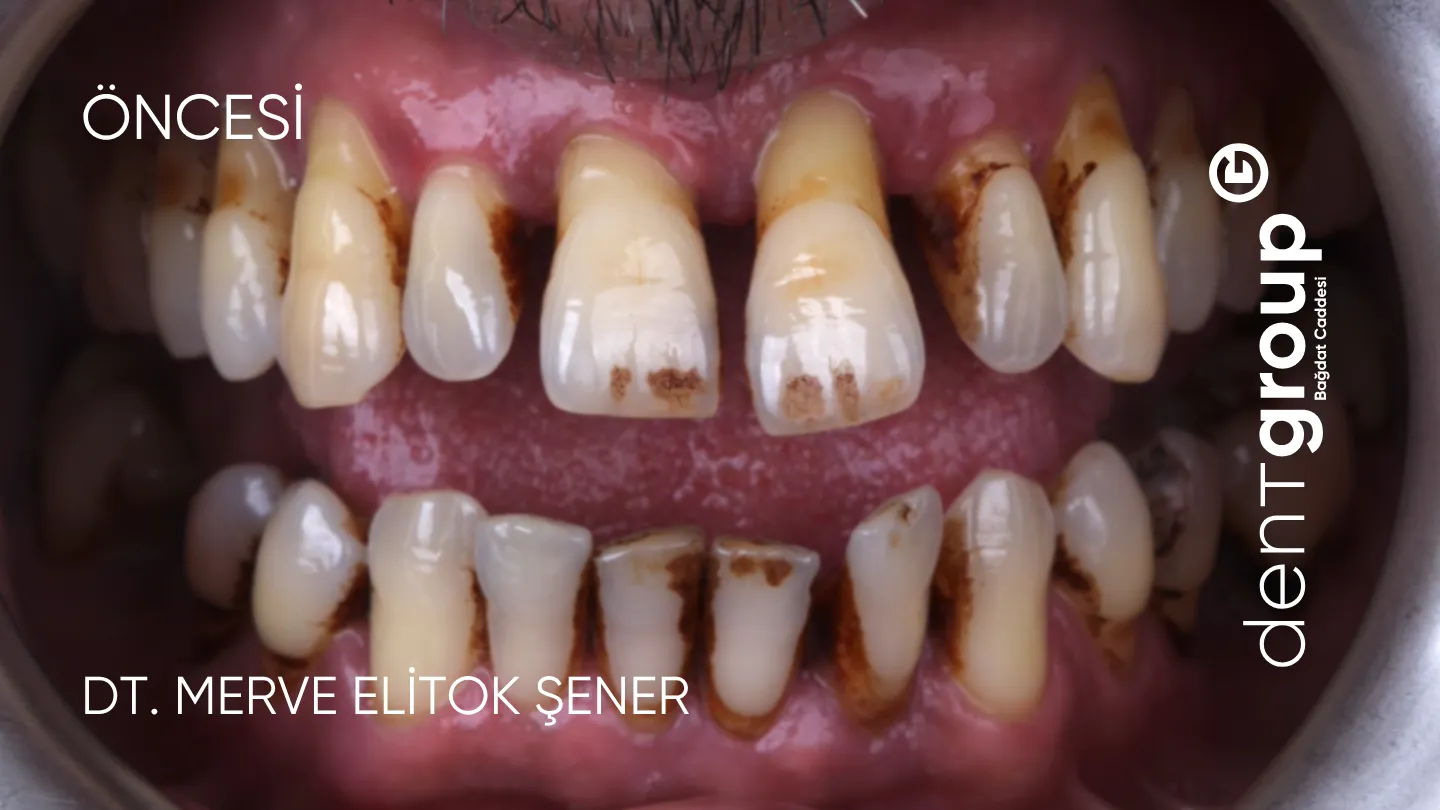
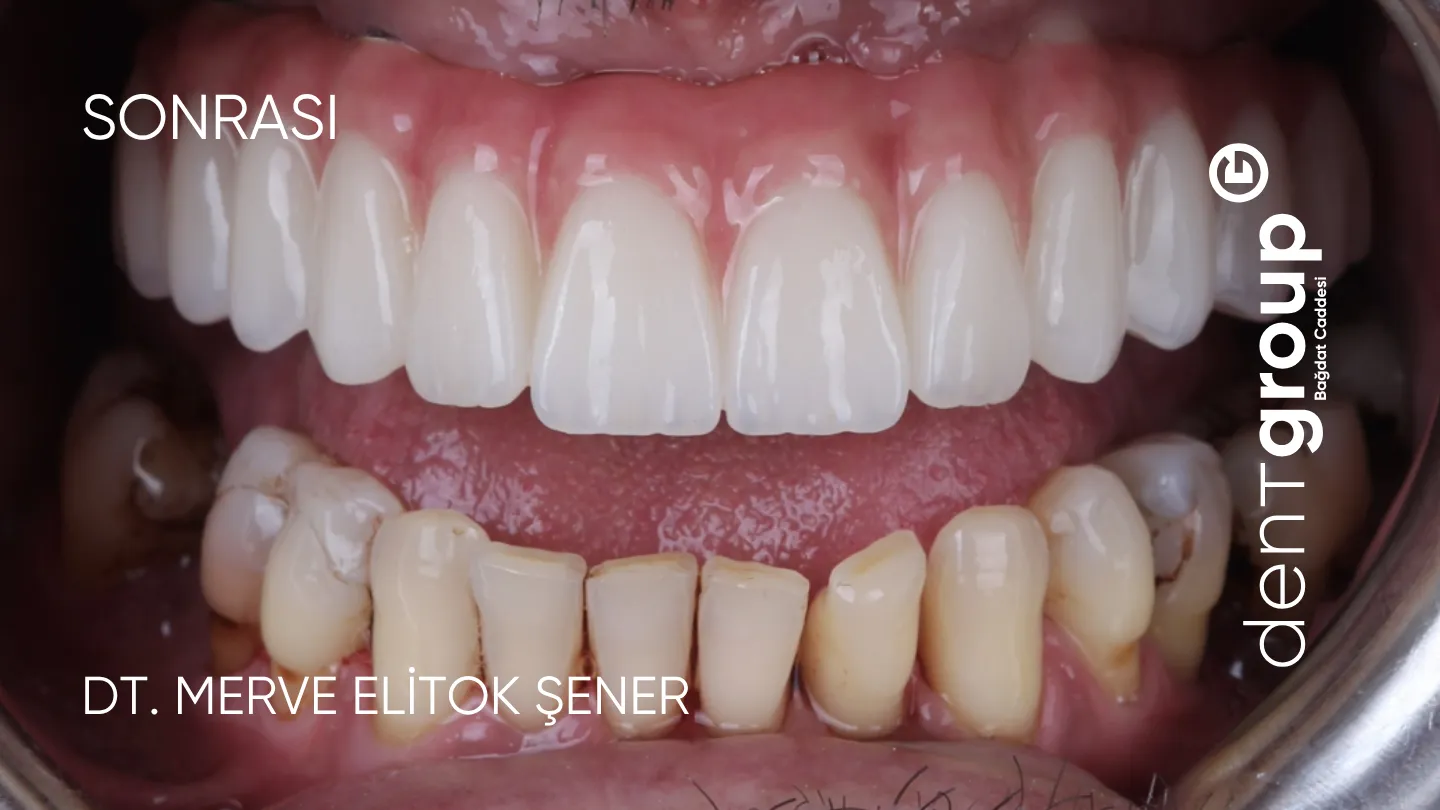
Full Upper Jaw Rehabilitation with All-on-6 Implant Treatment and Screw-Retained Monolithic Zirconia Prosthesis
Treatment began on April 12, 2023, and was completed on August 18, 2023. Final treatment photographs were taken on August 22, 2023.
The patient presented to our clinic with complaints of loose teeth and difficulty chewing. Clinical and radiographic examinations revealed bone and gum tissue loss associated with periodontal disease affecting all teeth in the upper jaw, resulting in tooth mobility. Following a surgical consultation, extraction of the remaining upper teeth, All-on-6 implant treatment, and full upper jaw rehabilitation with a one-piece zirconia prosthesis were planned.
During the initial stage of treatment, all remaining upper teeth were extracted on the same day, and six dental implants were placed during the same surgical session. Following surgery, digital impressions were obtained to fabricate a temporary fixed prosthesis. Two days later, the temporary fixed prosthesis was fitted, followed by an approximately three-month healing period to allow the implants to integrate with the surrounding bone.
Once the healing period was completed, new digital impressions were taken and the necessary prosthetic try-ins were performed. Treatment was finalized with the placement of a screw-retained, fixed, one-piece monolithic zirconia prosthesis, designed according to the patient's oral anatomy, occlusal relationships, and aesthetic requirements.
Throughout the treatment process, the patient remained without a prosthesis for only two days. The temporary fixed prosthesis supported the patient's aesthetic and functional needs during the implant healing period. Upon completion of treatment, the missing upper teeth were rehabilitated, restoring chewing function and improving smile aesthetics.
*This post is intended for informational purposes only and does not constitute advertising or promotion.
*The images have been published with the patient's explicit consent.
*Treatment outcomes are individual, and the same results cannot be guaranteed for every patient.
*Treatment planning and procedures may vary depending on each patient's clinical needs.
*This content has been prepared in accordance with Article 7 of the Regulation on Promotion and Information Activities in Healthcare Services, published in the Official Gazette dated November 12, 2025.
*For further information, please consult a dentist.
*Results may vary from person to person in all surgical or invasive procedures.
*It is recommended that you obtain detailed information from your dentist before undergoing any procedure.
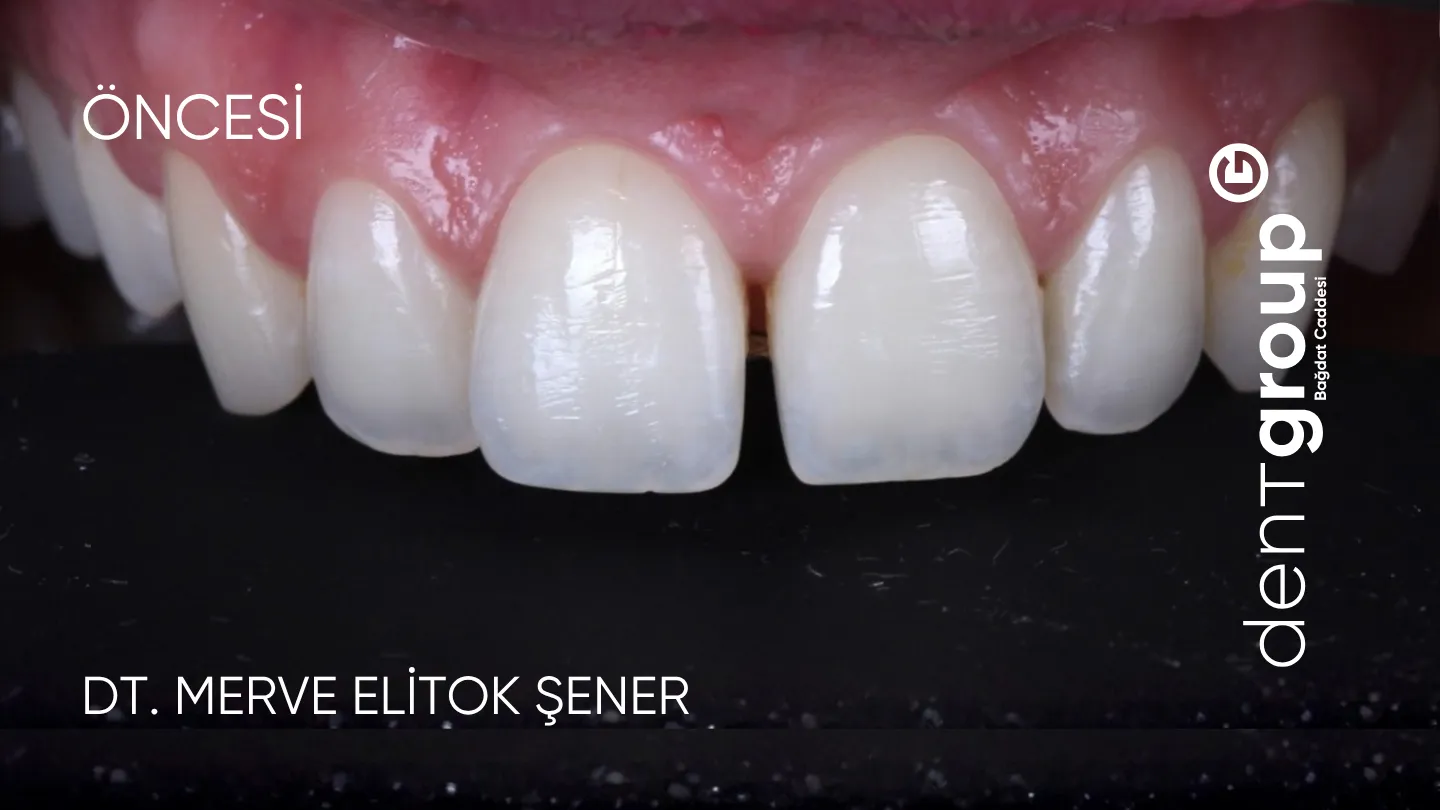
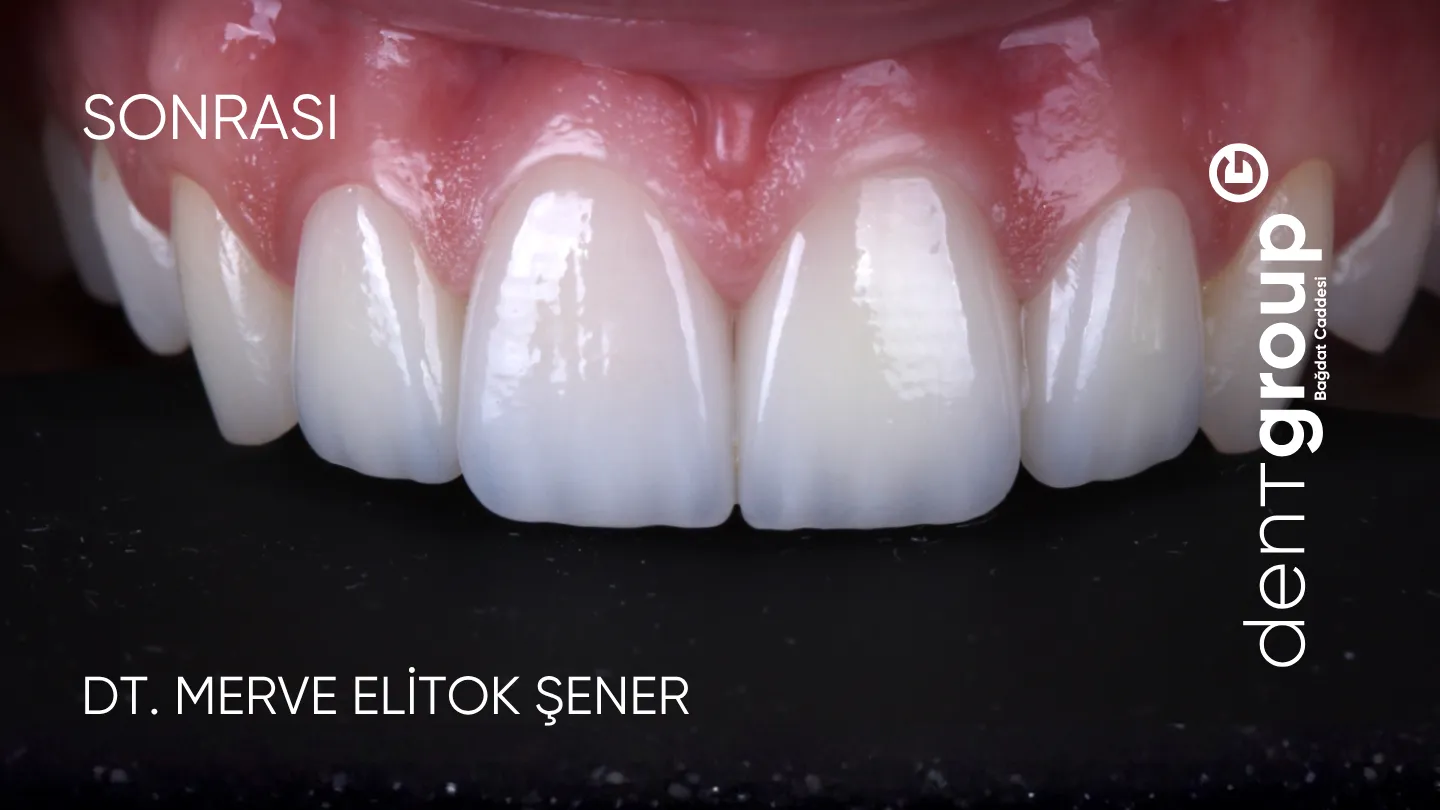
Aesthetic Smile Rehabilitation with Teeth Whitening, Digital Smile Design, Glass-Ceramic Crown and Porcelain Veneers
Treatment began on April 21, 2025, and was completed on May 14, 2025. Final treatment photographs were taken on May 21, 2025.
The patient presented to our clinic with aesthetic concerns regarding the gap between the two upper front teeth. Having previously undergone orthodontic treatment, the patient preferred to continue treatment with prosthetic restorations. Following a clinical evaluation, a treatment plan involving the four upper front teeth was developed to achieve aesthetic harmony and a balanced smile.
The treatment process began with teeth whitening applied to all teeth. Photographs and digital impressions were then taken, and a personalized digital smile design was created.
During the evaluation, it was determined that tooth number 11, which was positioned further outward than the adjacent teeth, required a crown, while porcelain veneers were considered appropriate for the other three upper front teeth. Following tooth preparation, digital impressions were obtained and the restorations were fabricated.
Glass-ceramic material was selected for the final restorations. Treatment was completed with one glass-ceramic crown and three glass-ceramic porcelain veneers in the upper anterior region. Particular attention was given to the natural shape of the teeth, shade harmony, and overall smile aesthetics.
Upon completion of treatment, the aesthetic irregularity between the two front teeth was addressed. The restorations were designed to harmonize with the surrounding teeth in both shape and shade, resulting in a natural-looking and aesthetically balanced smile.
*This post is intended for informational purposes only and does not constitute advertising or promotion.
*The images have been published with the patient's explicit consent.
*Treatment outcomes are individual, and the same results cannot be guaranteed for every patient.
*Treatment planning and procedures may vary depending on each patient's clinical needs.
*This content has been prepared in accordance with Article 7 of the Regulation on Promotion and Information Activities in Healthcare Services, published in the Official Gazette dated November 12, 2025.
*For further information, please consult a dentist.
*Results may vary from person to person in all surgical or invasive procedures.
*It is recommended that you obtain detailed information from your dentist before undergoing any procedure.
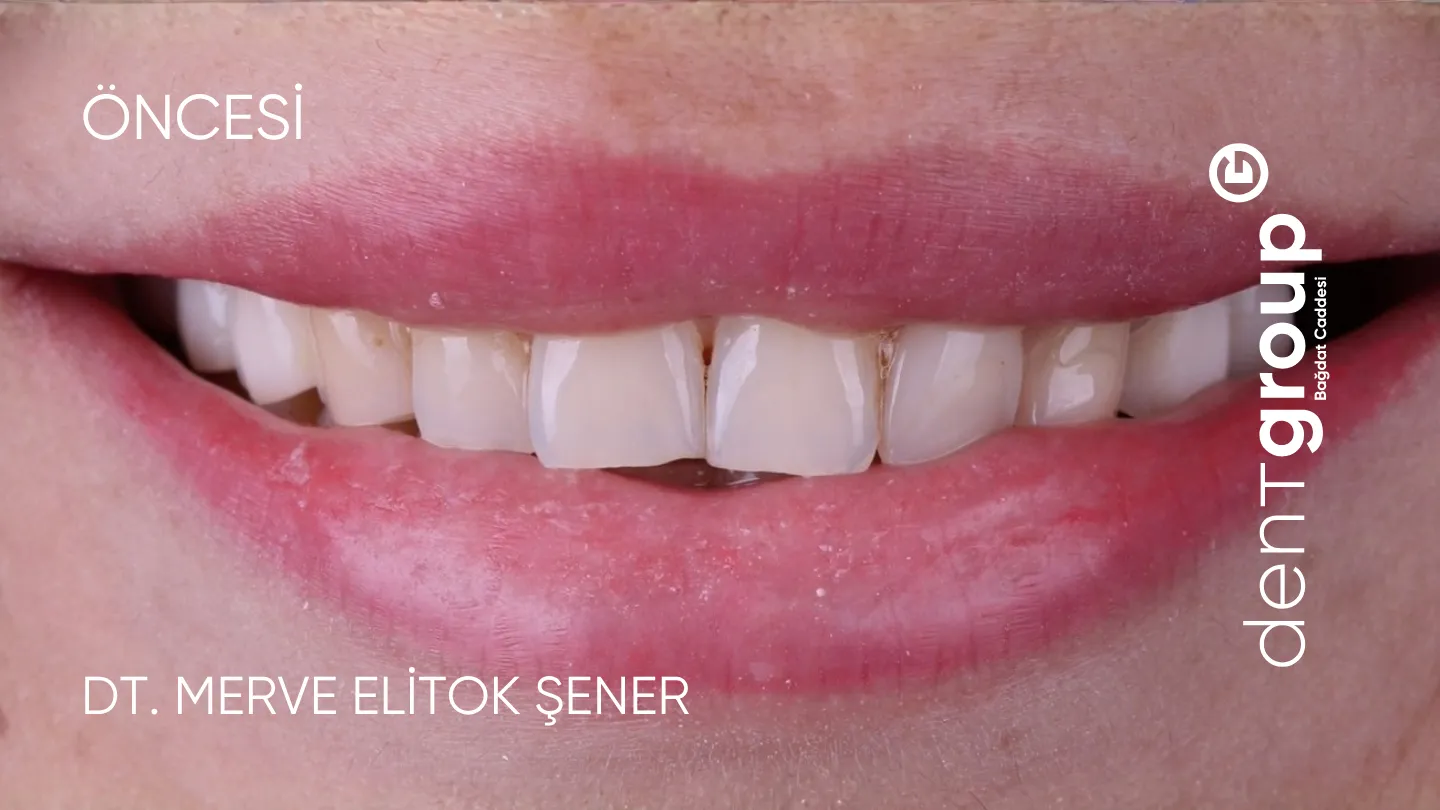
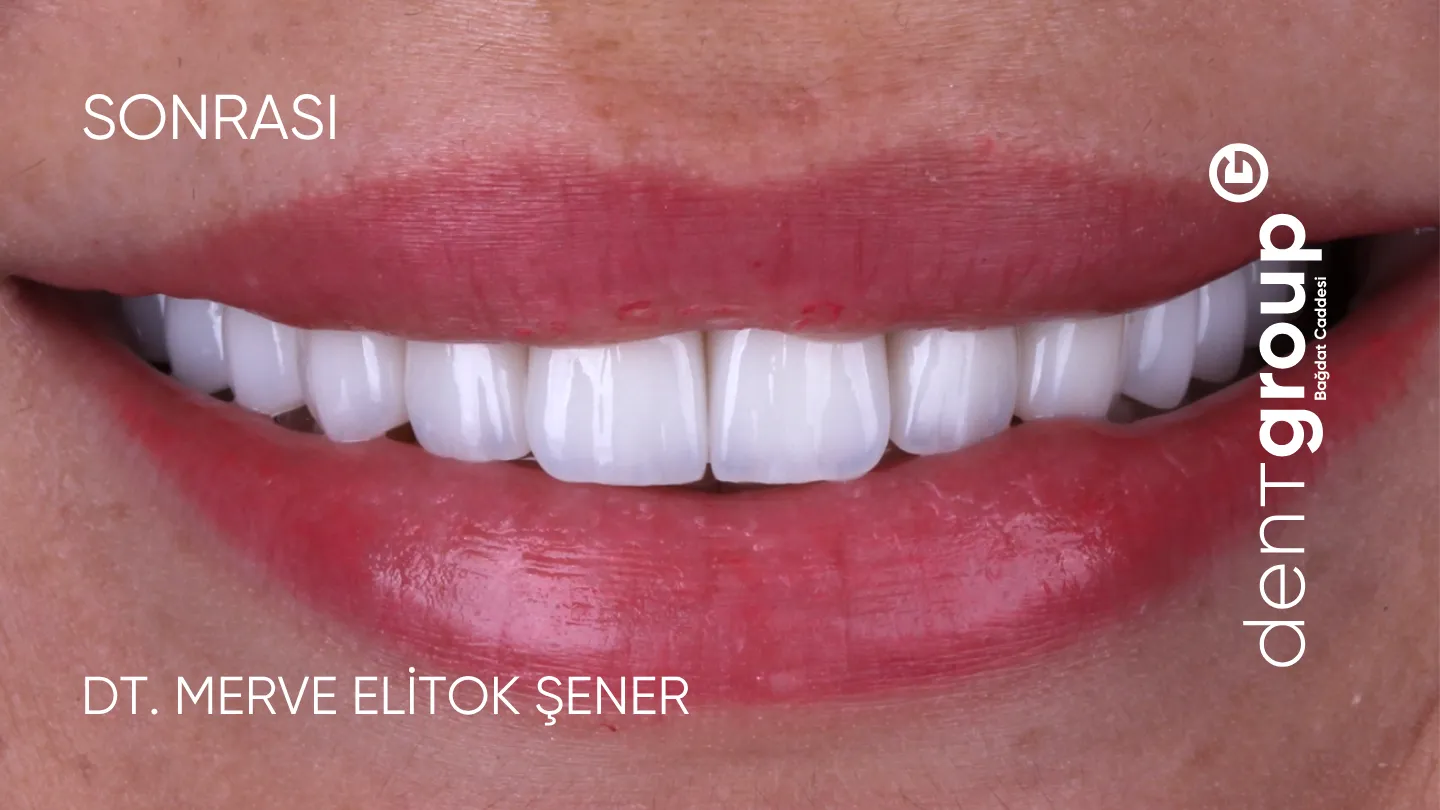
Aesthetic and Functional Rehabilitation with Dental Implants, Zirconia Bridges, Zirconia Crowns, and Glass-Ceramic Porcelain Veneers
Treatment began on August 6, 2025, and was completed on December 20, 2025. Final treatment photographs were taken on January 7, 2026.
The patient presented to our clinic with aesthetic concerns and existing dental bridges that had deteriorated over time and lost their functionality. Following clinical and radiographic examinations, extraction of teeth numbered 17, 25, 26, and 27 was planned. A comprehensive treatment plan was developed based on the patient's aesthetic and functional needs.
During treatment, the necessary extractions were performed, and dental implants were placed in the regions of teeth 25 and 27 in the upper left jaw to rehabilitate the missing teeth. Intraoral and facial photographs were then taken, digital impressions were obtained, and a personalized digital smile design was created.
As part of the prosthetic rehabilitation, a zirconia bridge was placed in the upper right posterior region, while zirconia crowns were applied to the premolar region. Six glass-ceramic porcelain veneers were selected to address aesthetic irregularities in the anterior region. Particular attention was given to the natural shape of the teeth, shade harmony, occlusal relationships, and overall integration with facial aesthetics.
Upon completion of treatment, the patient's chewing function was improved, the vertical dimension of occlusion was increased, and an aesthetic and functional smile rehabilitation with a natural-looking appearance was achieved.
*This post is intended for informational purposes only and does not constitute advertising or promotion.
*The images have been published with the patient's explicit consent.
*Treatment outcomes are individual, and the same results cannot be guaranteed for every patient.
*Treatment planning and procedures may vary depending on each patient's clinical needs.
*This content has been prepared in accordance with Article 7 of the Regulation on Promotion and Information Activities in Healthcare Services, published in the Official Gazette dated November 12, 2025.
*For further information, please consult a dentist.
*Results may vary from person to person in all surgical or invasive procedures.
*It is recommended that you obtain detailed information from your dentist before undergoing any procedure.
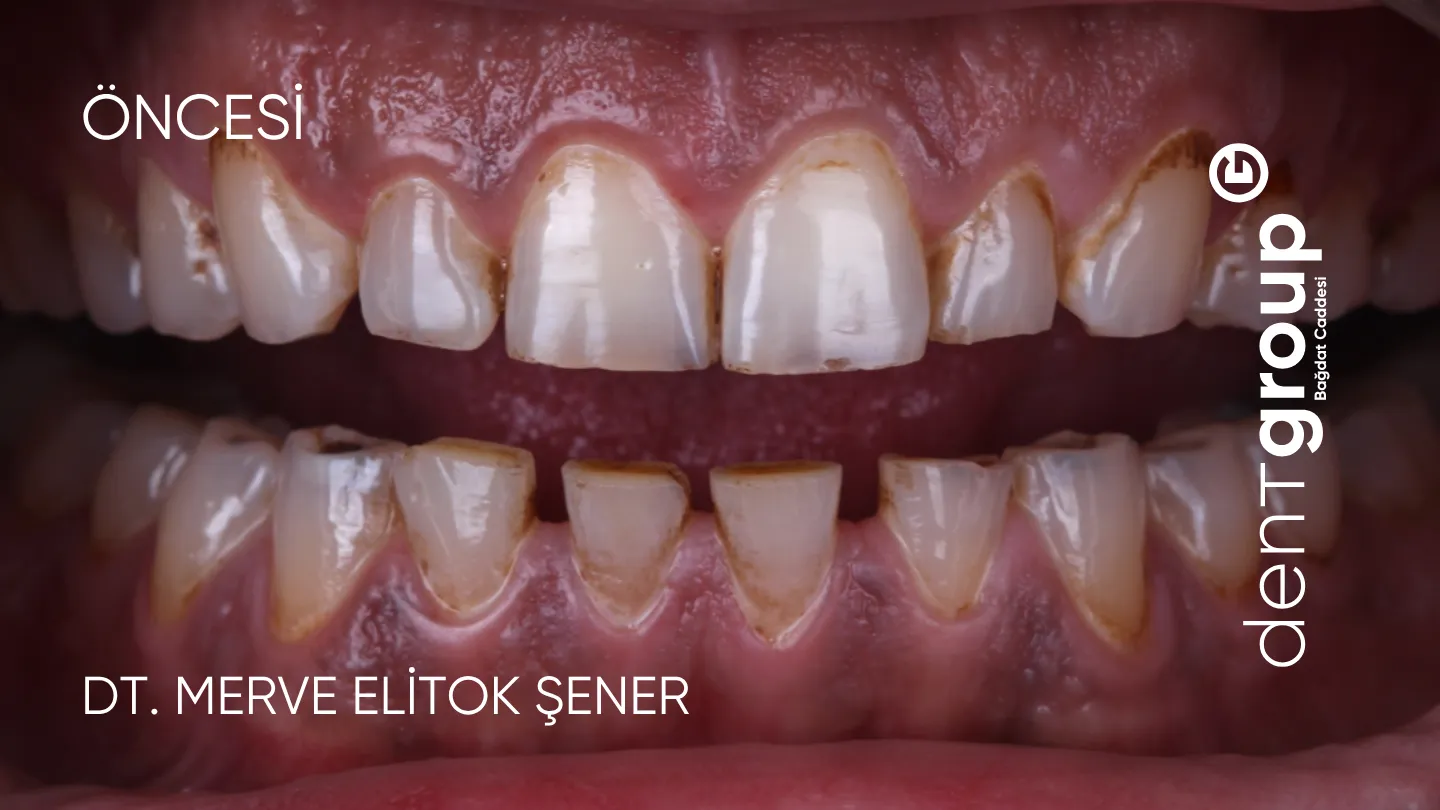
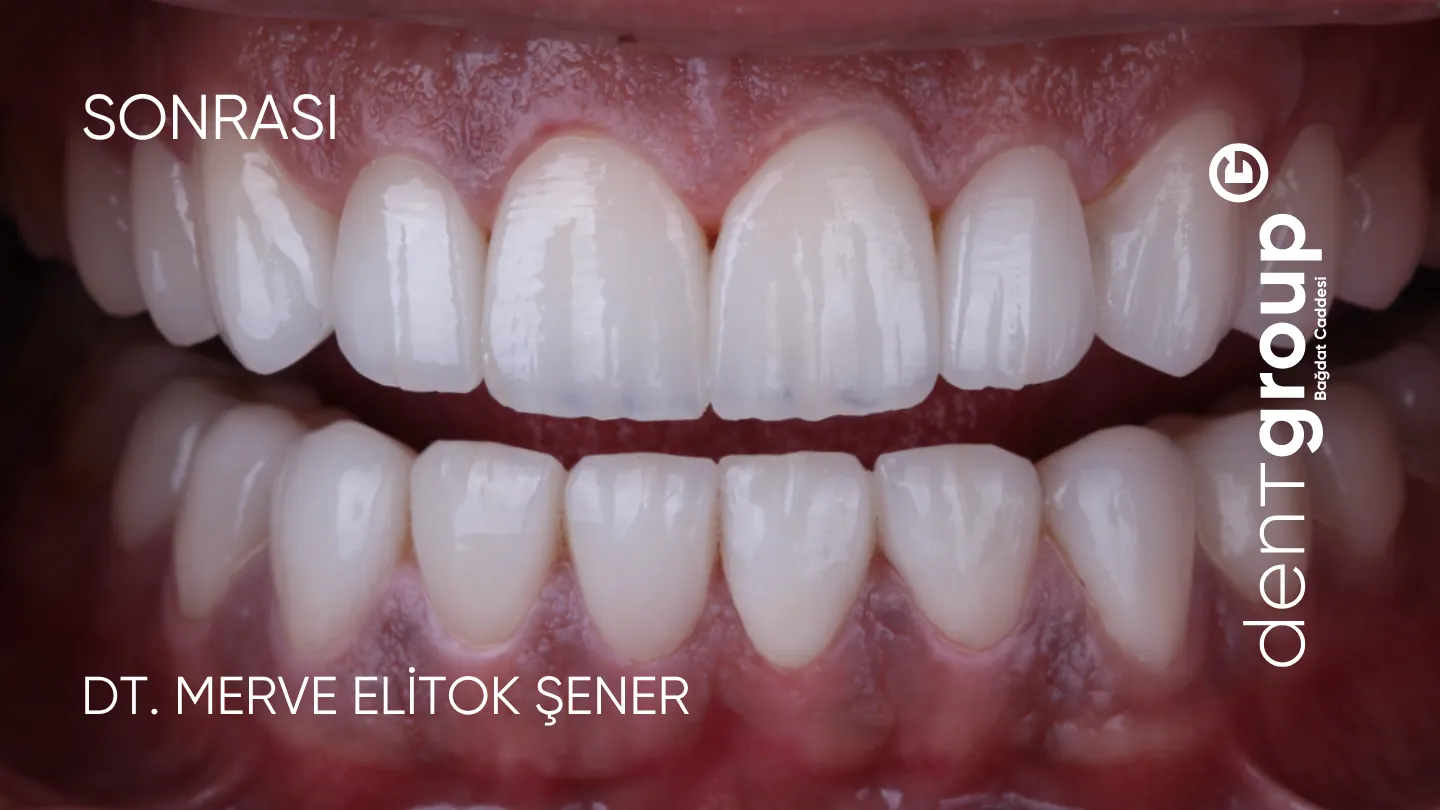
Aesthetic and Functional Rehabilitation with Digital Smile Design, Glass-Ceramic Porcelain Veneers and Onlays
Treatment began on November 28, 2022, and was completed on December 17, 2022. Final treatment photographs were taken on December 19, 2022.
The patient presented to our clinic with aesthetic concerns related to tooth wear and discoloration. Clinical and radiographic examinations revealed abrasion and erosion affecting 10 teeth in the upper jaw and 10 teeth in the lower jaw. Additionally, tooth grinding (bruxism) had caused wear on the occlusal surfaces and a loss of vertical dimension.
A comprehensive prosthetic rehabilitation was planned to restore the patient's lost vertical dimension and address their aesthetic concerns. Porcelain onlay restorations were selected for the lower molars to increase the occlusal height, while porcelain veneers were planned to correct aesthetic irregularities in the anterior region.
The treatment process began with intraoral and facial photographs, followed by digital impressions obtained using an intraoral scanner. A personalized digital smile design was then created. Following tooth preparation, the proposed smile design was transferred to the patient's mouth through temporary restorations on the same day.
Glass-ceramic porcelain veneers and onlays were used for the final restorations. Particular attention was given to the natural shape of the teeth, shade harmony, occlusal relationships, and the newly established vertical dimension.
Upon completion of treatment, the patient's lost vertical dimension was restored, aesthetic irregularities were addressed, and an aesthetic and functional rehabilitation supporting chewing function was achieved.
*This post is intended for informational purposes only and does not constitute advertising or promotion.
*The images have been published with the patient's explicit consent.
*Treatment outcomes are individual, and the same results cannot be guaranteed for every patient.
*Treatment planning and procedures may vary depending on each patient's clinical needs.
*This content has been prepared in accordance with Article 7 of the Regulation on Promotion and Information Activities in Healthcare Services, published in the Official Gazette dated November 12, 2025.
*For further information, please consult a dentist.
*Results may vary from person to person in all surgical or invasive procedures.
*It is recommended that you obtain detailed information from your dentist before undergoing any procedure.
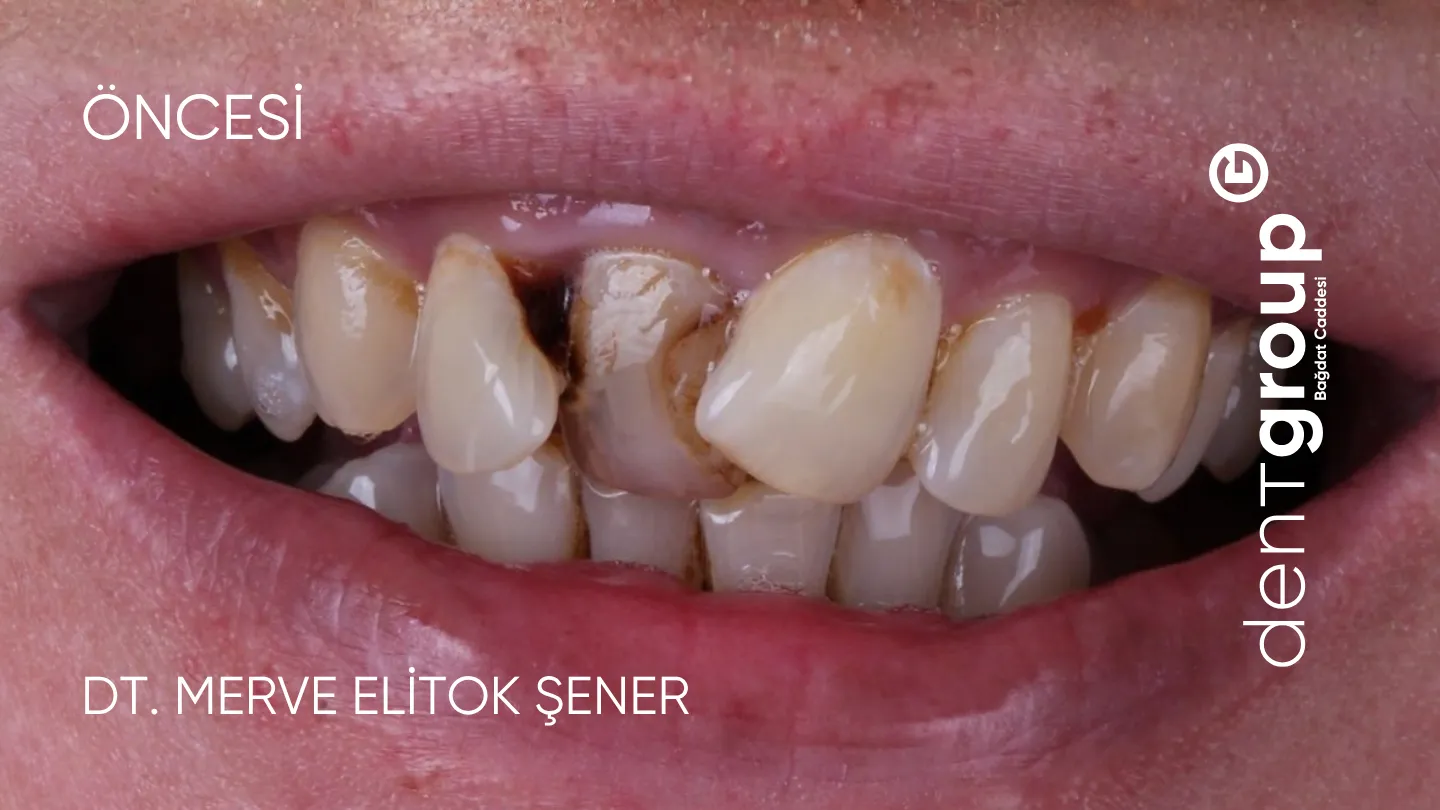
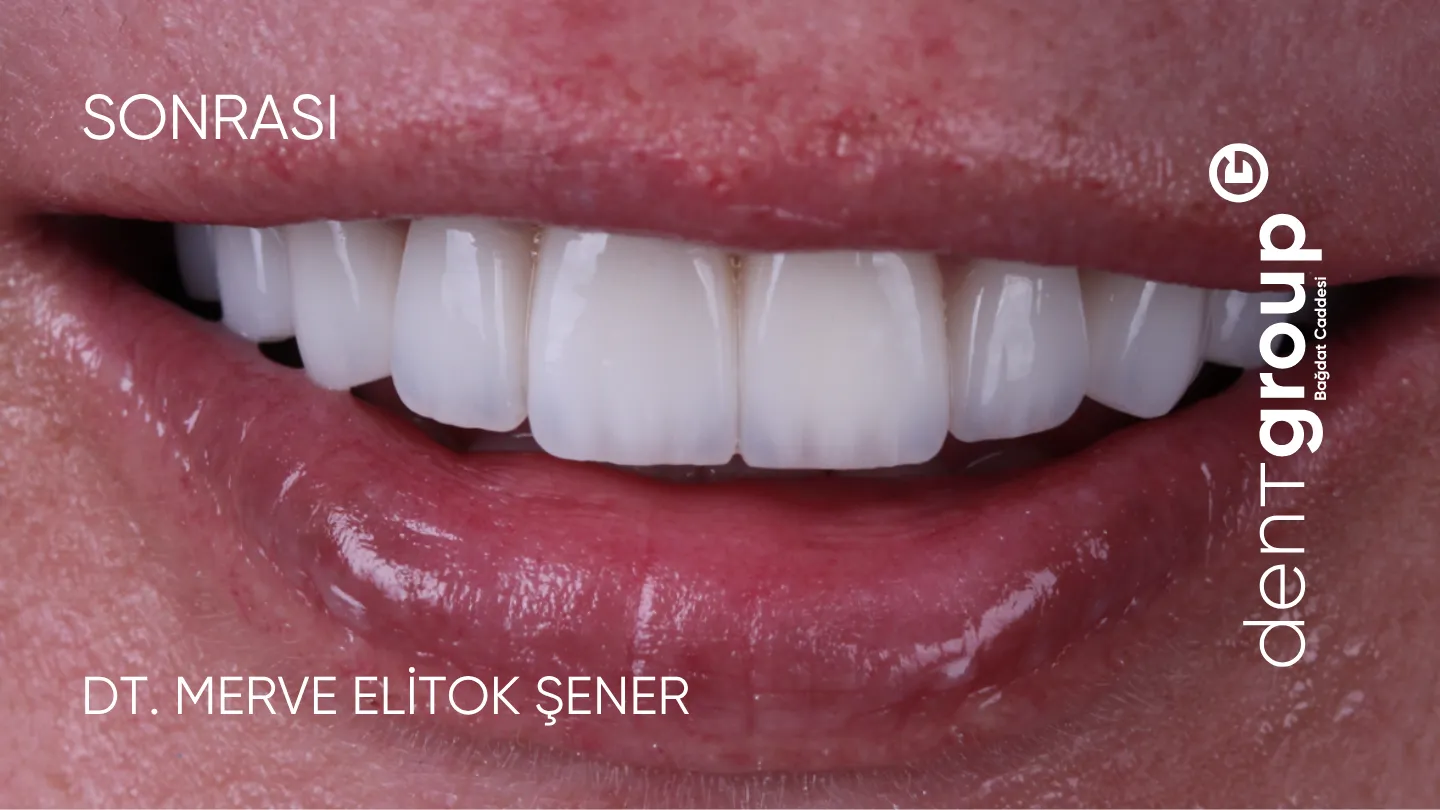
Aesthetic Smile Rehabilitation with Digital Smile Design and Glass-Ceramic Porcelain Crowns
Treatment began on December 15, 2025, and was completed on January 12, 2026. Final treatment photographs were taken on January 27, 2026.
The patient presented to our clinic with aesthetic concerns related to dental crowding and discoloration. Clinical and radiographic examinations revealed tooth wear (abrasion), decay, and misalignment affecting 11 teeth in the upper jaw and 6 teeth in the lower jaw. Porcelain crown restorations were planned to address aesthetic irregularities in the anterior region and improve tooth alignment.
The treatment process began with intraoral and facial photographs, followed by digital impressions obtained using an intraoral scanner. A personalized digital smile design was then created. Following tooth preparation, the proposed smile design was transferred to the patient's mouth through temporary restorations on the same day.
Glass-ceramic porcelain crowns were selected for the final restorations based on the patient's aesthetic and functional requirements. Particular attention was given to the natural shape of the teeth, shade harmony, occlusal relationships, and overall integration with facial aesthetics.
Upon completion of treatment, the aesthetic irregularities were addressed, achieving an aesthetic and functional rehabilitation that improved the patient's smile appearance and supported chewing function.
*This post is intended for informational purposes only and does not constitute advertising or promotion.
*The images have been published with the patient's explicit consent.
*Treatment outcomes are individual, and the same results cannot be guaranteed for every patient.
*Treatment planning and procedures may vary depending on each patient's clinical needs.
*This content has been prepared in accordance with Article 7 of the Regulation on Promotion and Information Activities in Healthcare Services, published in the Official Gazette dated November 12, 2025.
*For further information, please consult a dentist.
*Results may vary from person to person in all surgical or invasive procedures.
*It is recommended that you obtain detailed information from your dentist before undergoing any procedure.
This page has been updated 16 April 2026 11:44